Punk rock was the first style of music that really meant anything to me. That’s not really true, I was into grunge and radio rap for a while, but punk was the first musical culture that I felt any real affinity with. After all, punk was what lead me to anarchism, and then to class consciousness. Around the same time that I was getting into anarchism, I was also playing in bands, setting up shows, and tabling with anti-war, crimethinc, and animal rights literature at local concerts. By the time I was 18, being an anarchist within punk rock was what I considered to be the best way to get towards a freer world. I felt that the punk scene represented what could be the ‘revolutionary agent’ within society. I reasoned that this group of kids united by a love of a musical style could become radicalized, they then could go out and "do stuff.” I received a rude awakening from this hypothesis when the band I was in was invited to play with some pretty big bands like Phobia and Resist & Exist in LA and San
Diego for a series of benefits for the anarcho-punk publication, Profane Existence. LA is a hot bed for anarcho-punk and crust bands. There, I watched probably a thousand kids singing along, surrounded by anarchist banners, and literature tables. Yet, despite the sea of people who were "down,” a ragged collection of a million "Support the ALF” patches, and hundreds who chanted along with the lyrics, I realized how empty all of this was.
People here were united in an aesthetic and for the enjoyment of a musical style. It was also telling to me that the people I met in the various activist groups and at places like the Che Cafe (a radical space and infoshop) largely came from outside of punk and often did not dress the part. As I became older and more involved in community based action, I discovered that people were motivated to take action against Capital based on the conditions that were imposed upon them by class society. Slowly, as I came to class consciousness, and I grew to see that in punk, not only was class largely not discussed; there was a lack of looking at one’s relationship in class society. Meaning that if you put on an Aus-Rotten record you might get schooled on what the US was doing in Columbia, but you’re weren’t going to hear about the singer’s work and why it sucked. Punks largely didn’t talk about being without money or working – perhaps this was because of the class composition of punks, or perhaps it was just because of the cultural tradition of many anarcho-punk bands. As I became older, I was introduced to other forms of music that I was not before; namely hip hop, largely through the leftist political rap group, Dead Prez. Soon, I was listening to more political hip hop than I was political punk rock, and now, I listen to mostly non-’political’ hip hop.
At this point in my life, I find hip hop to be the most class conscious form of music. By this I mean hip hop is the most clear musical style that articulates the singer’s relationship to the commodity while at the same time expressing their struggle within that relation. The narrative that is found in hip hop is something that I think all proletarians can appreciate and find resonance with, even if the image of the street hustler or an up and coming gangsta is far from your present reality. The idea that one can only beat the material conditions that are imposed upon our lives by taking risks, breaking the law, through the action of close and trusted friends (thus making the police, feds, and snitches enemies), and not hesitating to use violence to achieve such ends, is a fine narrative indeed. Because so much of hip hop is about the reality of life within poverty, ghettos, and being forced into certain situations (drugs, prisons, police brutality), it can act as a vehicle for creating class consciousness. When people understand what they go through is not their fault, but the product of a system that, in fact benefits from exploitation, then they can make a better analysis of the current system and their place within it. The problem with hip hop however, is that much of it has created what I would refer to as a ‘false class consciousness,’ that has nothing to do with abolishing our present conditions and everything about class ascension. Meaning, the goal is not to abolish class, but to rise up from the bottom and get the fuck out.
Much of the substance of hip hop is also problematic: black market capitalism, prole on prole violence, and rampant sexism. Patriarchy is perhaps the most problematic aspect of this, and one of the biggest barriers holding hip hop back from being a truly class conscious form of music. This happens for several reasons, and probably the largest driving force is, of course, the music industry that demands that rappers keep turning out hits about empty sex and booty jams. But beyond that, the narrative of most hip hop starts off firstly with that of the individual; that individual largely always being a young male, as opposed to being any young proletarian or the collective body that is the class. This young male, in his attempt to appropriate material conditions (often through criminal means), also often sees female bodies as objects that he wants to appropriate. Thus, women, like money, cars, jewels, etc, become commodities to be accumulated for the purpose of consumption. In fact, women are often seen not only as commodities, but as commodities that require the buying of even more commodities. Thus, hit after hit about buying women various objects for the purpose of acquiring them, or talking about how other males are broke, and thus less admirable suitors towards various female bodied people continues to be pumped out. It is no surprise that these songs are hits, as they reinforce the values of the culture and help to reinforce racial stereotypes of young men of color. Thus, as female bodied people are commodified into objects just like cars or jewels, it becomes necessary for them to be demonized or spoken of simply as "bitches” and "hoes.” This is done for the sake of writing them and their agency off; thus justifying their position as commodities. Since much of hip hop has written off a whole section of the class, it thus cannot truly be a vehicle for class consciousness, and thus cannot be revolutionary. There are several artists out there who attempt to fight this (for instance the Coup, "Pimps down, hoes up!”) or 2pac (who although in some songs states that he is pro-choice and pro-woman, then goes on to state things like MOB, or Money over Bitches). This further plays itself off in hip hop culture, such as in the video, or on stage, or just in the sheer lack of female emcees singing and performing. In one of the latest Young Jeezy videos, "Put On,” which includes references to the economic recession and housing foreclosure, and is an all together pretty class conscious video. The video is then shot to shit when Jeezy comes out flanked by three women who do nothing but dance around him in a provocative manner. Hip hop not only often lacks women’s voices, it silences them. By denying women the opportunity to talk about their relationship to not only class society, but also their lives within the patriarchy, hip hop in essence further strengthens those systems of domination. Until hip hop sees women as active players in their own lives, able to articulate their own needs and desires not only as people but also as fellow proletarians, it will not be fully class conscious.
Hip hop is also further problematic, because it shapes and influences so much of proletarian and youth culture. Modern hip hop, while often antagonistic towards the police and aspects of the power structure, it does not question the nature of wage labor and commodity production. Since the late 60’s and 1970’s, the various nationalist and liberation movements that sought to organize and liberate the internal colonies in the ghettos and barrios of the United States were crushed by the US government. In the place of these groups and political parties such as the Black Panthers, self-defense crews formed into gangs. Political revolutionaries turned instead to drug trafficking. What was first seen as a movement to liberate communities, instead the focus became much more individualistic and concerned only for itself. Modern hip hop is a product of this class decomposition. The drive to accumulate material conditions and ‘fuck everyone else,’ shows this clearly. The influence of the drug game that has grown since the 1970’s and has thus influenced hip hop has spread to every t-shirt, car sticker, and rap album in the English speaking world. With the dreams of the 60’s crushed and nothing new to take its place, this new ‘false consciousness’ now parades around, offering no real opposition to Capital. While it may claim to be against snitches and the police, as long as this is only for the purpose of protecting the power and markets of the drug trade, then it will only be the musical voice of underground capitalism.
At a time of great crisis, we do need proletarian cultural forms like hip hop. While I have talked a lot of shit about it, truth be told, give a poor person a mic, and they’ll in the end give you something good, at least part of the time. Still, for hip hop to be a way to explain actual conditions and thus create class consciousness on a mass scale, it will have to leave behind much of what has been a part of hip hop culture for so long in the past. It must come to terms and destroy its patriarchal language, themes, and ways of presenting itself. It must bring female bodied people into the picture and allow them to talk about their lives as proletarians on even footing. It must turn away from being an individualistic movement, and instead focus on destroying the things which create poverty in the first place.
Many new class conscious and anarchist hip hop projects exist here in the US and in Europe, and for me are very exciting. Emcee Lynx, Drowning Dog, DJ Maletesta, Kenny Arkana, Looptroop, and Sherman Austin are all creating great hip hop music that is both revolutionary, class conscious, and also banging. Hopefully this continues and artists like this will become bigger and more popular within the class. Please, let the beat drop.
Originally posted: November 30, 2009 at Revolutionary Hip-Hop Report libcom.org
Our prayers and condolences goes out to the Yancey family at this time. No words can explain the sadness i feel for this family right now, it hit me like a tone of bricks, as it went from one minute of wishing MaDukes a happy bornday on our fb page Realhiphopforever to me doing a J dilla tribute because of her birthday to next sending her A Rest In Peace about her king.
Message from MaDukes: I would like to thank all of you for your unwavering support Last evening Mr.Yancey made his transition to glory. I'm very grateful for the strength of the family as it has been, the very rough side of the mountain for us. We truly have just begun to heal from my sons passing (JDilla ) in 2006. I trust in God and know he will see us through. Madukes
"Without him creating and raising James, we wouldn't have Dilla. Thank you for bringing him up right. R.I.P." Omar Guzman
"Rest in love Mr. Yancey, both you and your son Dilla. May peace and good memories of you comfort the Yancey family! Love and positivity to the Yancey family" Darvin D-ski Richard
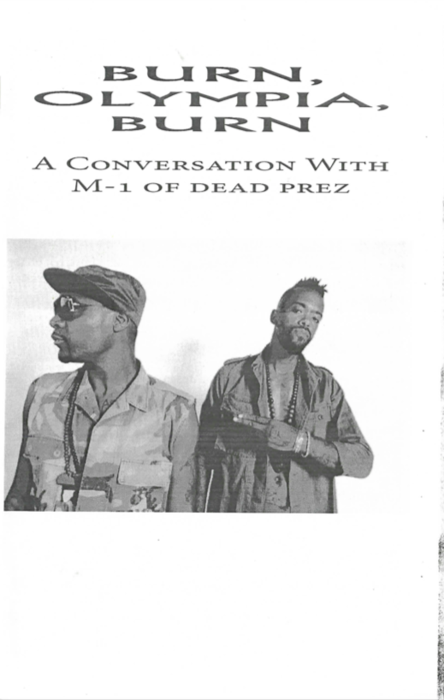
In this interview, he (M-1) shares his thoughts on where hip hop is today, and it’s potential use as a tool for resistance and liberation; his recent trips to Palestine; he election of Barrack Obama; and why dead prez considers Olympia, “one of [their] revolutionary homes.”
Immortal Technique at Rock The Bells . starts with Technique talking to Nick Huff Barili about his new documentary: The ®evolution of Immortal Technique and how he wouldn't have been able to accomplish all he has if he was signed to a major label. Tech goes on to define what success means to him: not by what you have but what you had to sacrifice to get to where you are. And at the end of the day if you are not happy then you are not successful. As the interview continues Tech says that he is working on his new album The Middle Passage along with two Ep's, one of which is with an underground legend from the West Coast. He goes on to talk about how New York Hip Hop artists have kept a distance from working with other regions and how he wants to end that. There is a lot that can be learned from different regions including the South. Immortal reiterates that Middle Passage with feature production by DJ Premier along with Green Lantern, Scram jones and Ali Shaheed Muhammad!
The legendary rapper Big Daddy Kane gave Kansas City one of the most memorable live performances I’ve personally ever seen outside of New Edition. This brother hasn’t lost a step; in fact to me he’s gained three or four more steps. His flow and delivery was grade A+, his stage performance was A+, and his swag and charisma was off the charts. This Brooklyn born emcee definitely got the job done, no pun intended, ripping off some of his classic hits like Raw, Smooth Operator, and a medley of his hits over the past twenty years. Not only taking us back down memory lane, but also making the Kansas City crowd especially the ladies feel special. He didn’t slack one bit and neither did his dancers Scoop and Scrap Lover, his backup dancers from day one. I had a chance to catch up with Big Daddy Kane back stage and chop it up with him about the current state of Hip Hop and his legacy. I have audio, but I had to take notes because like any iTouch would do, the battery went bad on me, so I had to get back to the old style of reporting with pen and pad.
Vigalantee: What do you think about the quality of music that is coming out right now?
BDK: Quantity came in and quality came out. There is a lot of money in the game right now, but I don’t think that a lot of artists are putting out quality music, there is quality music out there but it is not getting the proper exposure.
Vigalantee: What do you think about live performances now? because your show was awesome. How do you feel about the live performers of today?
BDK: There are some that you know don’t understand the art of performing; they probably didn’t grow up on singing live performances. I think there are some that have their own unique technique. It just depends on the artist.
Vigalantee: As you look over your career, did you think Hip Hop would get this far?
BDK: Yes, I always thought Hip Hop would last forever. To me it was the new form of rock and roll, rebellious music that the older generation didn’t like, but it was so powerful that i knew it would take off.
This is when the iTouch went dead! So pen and pad time!
Vigalantee: With all the success that you have had over the years along with being critically acclaimed as one of the top emcees of all time do you think that you get the props you deserve?
BDK: I feel satisfied with my career because I am still touring and getting love all over the world by doing something I love to do.
A sidebar question that I asked Big Daddy Kane, me being the Hip Hopologist, I went straight to the Rakim question; who would win in a battle between you and him, and I had to ask that for my friend Mario Gaitan, and just like all politically correct people do, he simply smiled at me like "there you go”. Personally I think that he would give Rakim the business because he has way more swag and personality along with multiple styles of rapping to match up with Rakim’s lyrical ability. In a smack format I give Big Daddy Kane a 2 to 1 edge in a battle.
There you have it, if Big Daddy Kane is in your town, your best bet is to go check this brotha out.
**Are you an MC, producer, DJ, breaker, writer or entrepreneur looking to promote your music, company, or any other project?
**Need a company that knows the culture and will promote you the right way?
Build a Buzz Promotions will help you "BUILD A BUZZ”!
Just like you, we've grown up as products of Hip Hop culture and know how to promote your project without sacrificing your artistic integrity! Our team is made up of artists and industry professionals who understand and respect the culture because...WE ARE HIP HOP!
WE ALSO MAKE IT EASY AND AFFORDABLE FOR YOU, THE INDEPENDENT ARTISTS AND ENTREPRENEURS TO GET COST EFFECTIVE PUBLICITY!
We'll work with you to create a plan that fits your budget!
Build a Buzz Promotions will help you:
> Tell the world your story
> Reach popular Hip Hop blogs, websites, mix shows, etc...
For information, email us at buildabuzzpromo@gmail.com or call 323-638-4020. Follow us @BuildabuzzPromo and find us on FB at http://www.facebook.com/buildabuzz.musicpromo
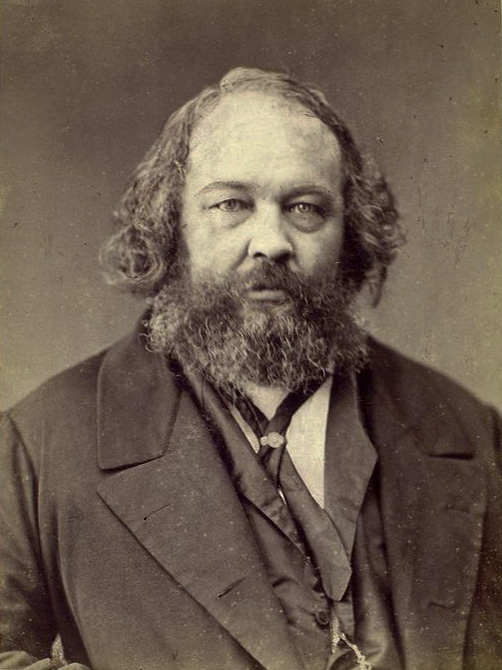
Ask most anarchists who were/are their influences and they will give the classic answer: Bakunin, Kropotkin, Proudhon etc. But of course, that’s the norm; in reality most of us had earlier influences that moved us in this direction. Personally, a blend of poverty, racism and socially motivated music made me move into this direction. As the title suggests, the first thinker and "philosopher” in my life wasn’t Bakunin and the classical writers, or any other political scientist, it was 2pac and the social music that many similar to him created. Being a minority, born into a working class family in a post-Stalinist country, had a lot to do with being attracted to the social criticism that hip hop offered regarding my status as an ethnically oppressed and impoverished individual.
The styling of hip hop music and especially 2pac made me realize the situation I am in its not limited to my neighborhood, or even the country as a whole. I soon discovered through such music, that the great USA, that most of us in the post-Stalinist countries looked to as a role model, faced in fact the same problems as I did in my own country. After the revolutions of 1989, a circus of so called "democracy” began in most eastern European countries, this circus began with crooked elections, false promises and shattered dreams. The anti-electoral sentiment that my country fueled me was echoed when I listened to one particular song of 2pac, in which he said:
"I'm writin you because, shit is still real fucked up in my neighborhood Pretty much the same way, right around the time when you got elected Ain't nothin changed All the promises you made, before you got elected.. .. they ain't came true Me and my homies is wonderin'...what's goin on?” – Letter to the President
Contrasting the two countries had a huge influence on my young mind; the dream of eventual prosperity was a lie for me and my social strata. If the "democratic” process didn’t really work in a country that had "democratic traditions” why it should work in my country? This was the catalyst that turned me off political parties and electoral politics, and I could say shaped an early embryotic anarchist.
Even further pushed by the names dropped by various hip hop artists, names such as Huey P Newton, Geronimo Pratt, Malcolm X, Marcus Garvey etc. I started looking into these people and seeing a totally different world, even though Black Nationalist oriented it appealed to me as a victim of racism. As I was plunging even further into what people call today "political/conscious hip hop”, my political orientation started to form, a particular song by the hip hop duo Dead Prez helped me outline the initial phase of being an unconscious anarchist, the song’s introduction went like this:
"You have the emergence in human society of this thing that's called The State. What is the State? The State is this organized bureaucracy. It is the police department. It is the Army the Navy. It is the prison System the courts and what have you. This is the State it is a repressive Organization. But the state and gee well you know you've got to have the Police because if there were no police, look at what you'd be doing to Yourselves -- you'd be killing each other if there were no police! But the Reality is the police become necessary in human society only at that junction In human society where it is split between those who have and those who ain't got.” - Police State
This applied to my sentiment, because in my real life, as a teenager, the state authorities never protected me nor people like me, witnessing in real life how privilege and wealth dictates protection. From now and then, something started to change, coming out of a post-Stalinist country I couldn’t approach the Marxist themes the western activists did, so this anarchist sentiment fitted me well.
Eventually, researching anarchism and studying anarchist philosophers crystalized my political orientations, but nevertheless the push was not initially Bakunin it was 2pac, Dead Prez, Immortal Technique and so many like them. Such kind of music made me aware that there is no problem in the system, the system itself is the problem. Before social networking, such methods globalized resistance and activism, these were the means people knew the problems were the same, this why my activism began with hip hop music.
In this episode of The Stream, we speak with Immortal Technique about his music, politics,activism, where he gets his news, hip hop, fan questions and much more, this is a must watch.